

Protect lakes and rivers from invasive species
Jasper National Park
Everyone plays a role in protecting park waters. Aquatic invasive species are spreading in western Canada and threatening lakes and rivers. Just one contaminated boat or piece of equipment can spread invasive plants, animals or diseases.
Aquatic invasive species spread quickly, have few natural predators and are nearly impossible to remove once established. They harm freshwater ecosystems and how people can use and enjoy the water.
Invasive species can:
- reduce water quality and biodiversity
- outcompete and threaten native species
- harm fish populations and reduce fishing opportunities
- leave sharp shells and foul smells on beaches and shorelines
- make water unsafe or unpleasant for swimming and other activities
- damage docks, boats and underwater infrastructure
- lead to closures of beaches, lakes and rivers
Whirling disease has been found in lakes and rivers in Alberta and British Columbia, including Banff, Yoho and Waterton Lakes national parks. This highlights the urgent need to prevent its spread.
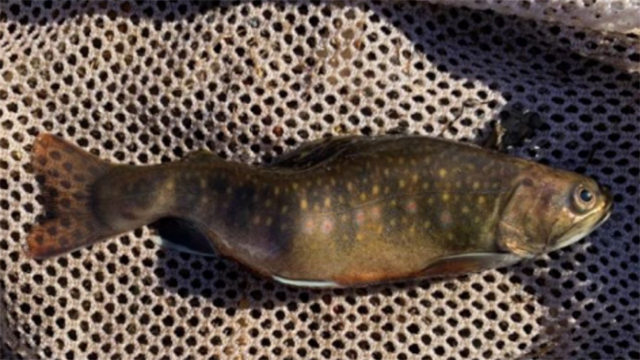
Whirling disease
Status: Not detected in Jasper, but present in Alberta and British Columbia
Whirling disease, caused by the parasite Myxobolus cerebrali, can lead to upwards of 90% mortality in juvenile trout and whitefish populations. The disease can spread to other water bodies through spores in mud. Affected fish may show the following signs: swimming in a whirling pattern, skeletal deformities of the body or head, and a dark or black tail.
There is no treatment for whirling disease. This disease is not harmful to humans or other mammals but can have significant effects on native fish populations, such as Athabasca rainbow trout.
First detected in Canada in Banff National Park’s Johnson Lake in 2016, it has spread to lakes and rivers in Alberta and British Columbia.
Invasive freshwater mussels
Status: Not detected in Jasper or Alberta
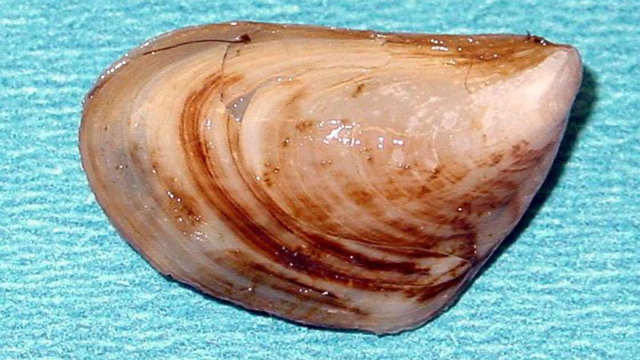
Quagga, zebra and golden mussels are small, fan-shaped, and dark brown to white in colour. These fingernail-sized freshwater mollusks produce millions of eggs. Dense colonies can make shorelines unusable due to their sharp shells and unpleasant odour.
They are very efficient at filtering nutrients from the water, leaving no food for native species. This affects the entire food web, impacting plant and animal life in the region, and altering water chemistry and clarity.
First detected in Canada’s Great Lakes, they have spread through much of eastern Canada, including Manitoba, Ontario, Quebec and New Brunswick.
Eurasian watermilfoil
Status: Not detected in Jasper or Alberta
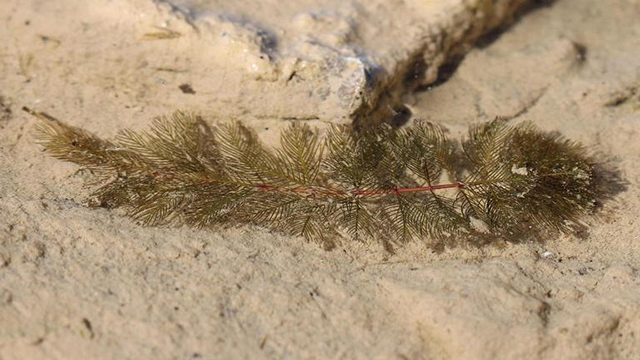
Eurasian watermilfoil is an underwater plant native to Eurasia and North Africa. New colonies can form from a single stem, seed or leaf. Eurasian milfoil forms thick layers that shade native plants and decrease oxygen levels.
Eurasian watermilfoil is one of the most widespread aquatic invasive species in Canada. It is present in lakes and rivers across the country, including British Columbia, Manitoba, Ontario, Quebec, New Brunswick and Prince Edward Island.
Didymo
Status: Present in Jasper and across Canada
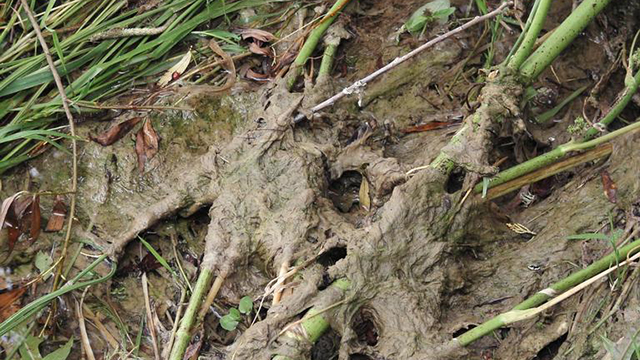
Didymo, also called rock snot, is a freshwater alga. While rock snot is a natural part of the environment, it can become a problem when it clumps together. The algae attach to rocks in streams and can form mats that look like wet toilet paper or wool, smothering important habitat for fish, invertebrates and plants.

Know where to go with clean watercraft and equipment
Lakes and rivers in the mountain national parks are divided into zones with different rules for water activities. These rules help protect sensitive ecosystems while allowing safe and enjoyable recreation.
Before visiting a lake or river, check which activities are allowed in the water body you plan to visit. Rules vary across national parks. Visit each park’s website for details.
Wherever you go, the most important step is to clean, drain and dry anything used in or on the water.
Clean, drain and dry

Clean
Remove all mud, sand and plants using a sponge, cloth or hose
Drain
Empty all water from watercraft and containers; tip them upside down and wipe away any remaining water

Dry
Dry everything for at least 48 hours before moving to a different water body; dry for at least 30 days if last used outside Alberta, British Columbia or the Canadian territories
Transcript
[This video has no spoken language. Text appears on screen throughout the video.]
[Sounds of water and calm guitar music throughout the video.]
[Two people paddling a canoe; Parks Canada beaver logo appears.]
Text: Exploring Parks Canada’s lakes, streams and rivers is a popular way to see the national parks.
[Aerial view of large blue lake.]
Text: Yet these water bodies are vulnerable to aquatic invasive species.
[Two people paddling a canoe, paddleboarder behind them, on a lake.]
Text: These invaders can hitch a ride on watercraft like kayaks, inflatables and SUPs.
[Canoers and paddleboarder arrive to shore.]
[Images shown of zebra mussels and shelled invasive species.]
Text: Aquatic invasive species, once established, irreversibly damage ecosystems and harm species at risk.
[Canoers and paddleboarder arrive on shore.]
[The words “CLEAN DRAIN DRY” are written in mud on the back of a canoe. Water is slowly poured overtop and washes it away.]
[Canoers pull canoe onto shore.]
Text: Clean, Drain, Dry your watercraft and gear BEFORE and AFTER entering the water.
Large title on screen: Step 1: Clean
[Two people clean a canoe. A jug scoops water from a lake.]
[View from inside a canoe; water is poured onto the side of a canoe while a cloth wipes it down.]
Text: Clean all debris from your watercraft and water-related gear BEFORE and AFTER your trip.
[A paddleboard is wiped down with water and a cloth.]
[Two people pour water and wipe down the backside of a paddleboard.]
Large title on screen: Step 2: Drain
[Two people tip a canoe onto its side; water is emptied from a canoe on its side.]
Text: Drain coolers, buckets, compartments and other items that may hold water on land before leaving the waterbody.
[A paddle is pulled apart and emptied of water.]
Text: Some aquatic invasive species can survive in pools of water for 30 days.
[Two people stand a paddleboard up against a tree.]
Large title on screen: Step 3: Dry
[Two people wipe down the backside of a paddleboard. A close-up shows a hand wiping down a paddleboard with a cloth.]
Text: Use a clean towel to wipe down the entire watercraft. Set aside to dry.
[Two people wipe down a paddleboard with cloths.]
Text: Ensure items are completely dry before entering a new lake, stream or river.
[A close up of a paddleboard with water on it.]
[Two people walking through a forest, one person holding a paddleboard and another with PFD.]
[A person rolls a deflated paddleboard and wipes it down with a cloth as they roll it.]
[Two people pack a paddleboard into a bag.]
[A lake with two people paddling a canoe, and two people standing on paddleboards.]
Text: Sustainable aquatic ecosystems are vital to the overall health of Canada’s lakes, streams and rivers.
Text: Do your part to protect park waters: Clean, Drain, Dry.
[Logo] Parks Canada, Parcs Canada.
[Logo] Canada
Water Activity Zones
 View larger map
Text description
In the Water Recreation Zone, shown in purple, all recreational activities are permitted. The Water Recreation Zone includes lakes near the town of Jasper, Maligne Valley, and other lakes accessible by road. Also in this zone are the Athabasca River downstream of Athabasca Falls, the Snake Indian River downstream of Snake Indian Falls, the Whirlpool River, and sections of the Miette, Maligne, Snaring, Fiddle and Astoria rivers.
In the Special Tactics Zone, shown in red, all recreational activities are permitted except the use of fishing waders and wading boots. The Special Tactics Zone includes the Athabasca River upstream of Athabasca Falls to its junction with the Chaba River, the Chaba River downstream of Fortress Lake, and the Sunwapta River from its junction with the Athabasca River to the rafting put-in.
All other waters in Jasper National Park fall within the Water Preservation Zone, shown in yellow. Paddling, fishing waders and wading boots are not allowed in the Water Preservation Zone.
Water Recreation Zone
Water Recreation Zones include popular or recreationally valued lakes and rivers where water activities can continue with safeguards in place.
Clean, drain and dry all watercraft and water-based equipment before entering or moving between waters.
Water bodies in the Water Recreation Zone
- Astoria River (sections of)
- Athabasca River downstream of Athabasca Falls
- Beaver Lake
- Cabin Lake
- Caledonia Lake
- Celestine Lake
- Edna Lake
- Emerald Pond
- Fiddle River (sections of)
- Hibernia Lake
- Honeymoon Lake
- Horseshoe Lake
- Katrine Lake
- Lac Beauvert
- Lake Annette
- Lake Edith
- Leach Lake
- Maligne Lake
- Maligne River (sections of)
- Marjorie Lake
- Medicine Lake
- Miette River (sections of)
- Mildred Lake
- Minnow Lake
- Moab Lake
- Patricia Lake
- Pyramid Lake
- Riley Lake
- Saturday Night Lake
- Snake Indian River downstream of Snake Indian Falls
- Snaring River (sections of)
- Talbot Lake
- Upper Mina Lake
- Valley of the Five Lakes
- Whirlpool River
Allowed
- Swimming
- Beach toys
- Snorkeling
- Fishing, including waders and associated equipment
- Paddling (canoes, kayaks, paddleboards)
- Inflatables (floats, tubes, toys, paddleboards, rafts)
- Electric motorized watercraft (Pyramid, Patricia, Talbot, Medicine, and Maligne lakes only)
- Scuba diving (Pyramid and Patricia lakes, Lake Annette, Lake Edith and Lac Beauvert only)
Special Tactics Zone: Middle Athabasca River
In Jasper National Park, fishing waders and wading boots are not allowed in the Special Tactics Zone. This zone includes rivers above Athabasca Falls, a natural barrier to invasive species.
Clean, drain and dry all watercraft and water-based equipment before entering or moving between waters.
Water bodies in the Middle Athabasca River
- Athabasca River upstream of Athabasca Falls to its junction with the Chaba River
- Chaba River downstream of Fortress Lake
- Sunwapta River from its junction with the Athabasca River to the rafting put-in
Water Preservation Zone
In Jasper National Park, watercraft, fishing waders and wading boots are not allowed in the Water Preservation Zone. These lakes and rivers are sensitive areas that need extra protection.
Clean, drain and dry all water-based equipment before entering or moving between waters.
Water bodies in the Water Preservation Zone
- All water bodies that are not listed within a different zone.
- This includes many backcountry lakes and rivers, such as those found in the Tonquin Valley and North and South Boundary areas.
Allowed
- Swimming
- Beach toys
- Snorkeling
- Fishing without waders or wading boots
Prohibited
- Fishing waders and wading boots
- Paddling (canoes, kayaks, paddleboards)
- Inflatables (floats, tubes, toys, paddleboards, rafts)
- Motorized watercraft
- Scuba diving
Why watercraft, fishing waders and wading boots are prohibited in the Water Preservation Zone
Aquatic invasive species continue to be detected and spread in the mountain national parks. These species are most often spread unintentionally by people, particularly when watercraft and fishing gear are moved between water bodies.
- Watercraft, fishing waders and wading boots can retain water, mud and organic material, in which microscopic larvae, spores or plants may survive.
- Fishing waders and boots accumulate sediment from lake and river bottoms and are often used in multiple water bodies over short periods.
- Materials such as neoprene and felt take longer to dry, further increasing the risk of transporting invasive species.
The risk is amplified in Water Preservation Zones, which are often in remote backcountry locations. Visitors in these areas frequently move equipment between multiple water bodies and watersheds, often without the time or resources to properly clean, drain and dry between uses. Limiting the use of fishing waders and watercraft in these areas reduces pathways for invasive species.
Report aquatic invasive species sightings
Take a picture, note the location, and send it to ReportAIS-SignalerEAE@pc.gc.ca.
Sightings outside of the national parks can be reported to:
1-855-336-2628 (BOAT) in Alberta and 1-888-933-3722 in British Columbia
- Date modified :