
Fences in the Sand
Sable Island National Park Reserve
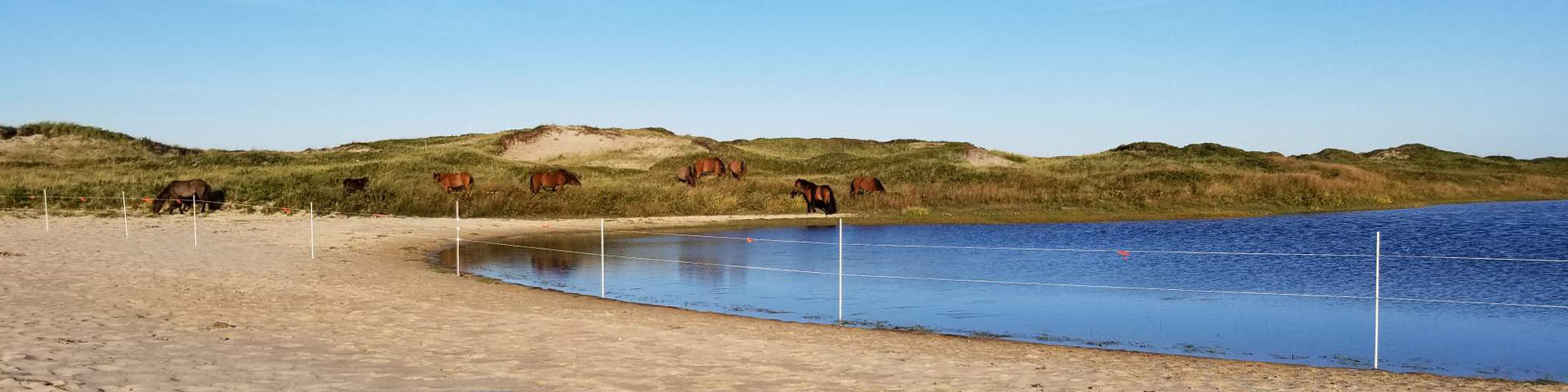
Fences in the Sand was a five-year project (2020-2025) by Parks Canada and the Sable Island Institute. The project used fenced exclosures to study how the wild horses influence the dune ecosystems of Sable Island National Park Reserve.
On this page:
- Digital exhibit
- Objectives
- Observations
- Results
- Methods
- Collaboration and funding
- Image gallery
- Related links
Digital exhibit
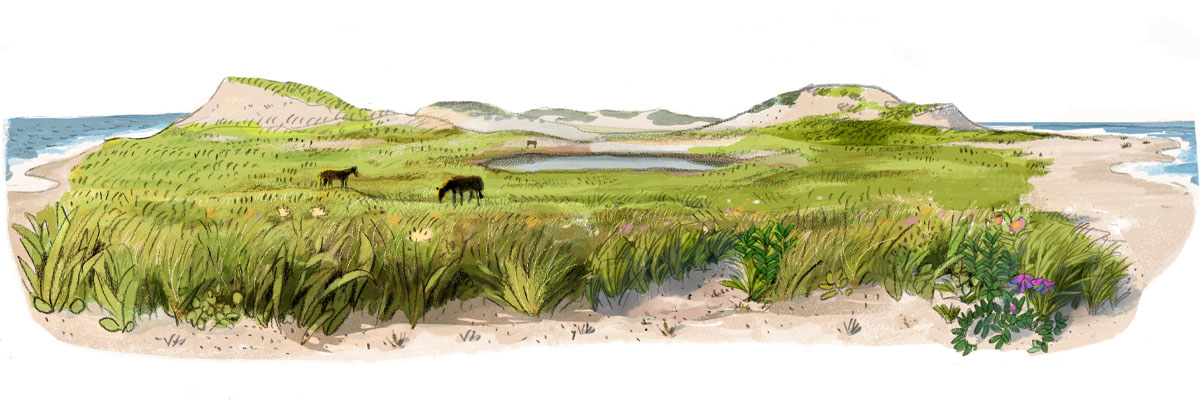
Dive into this Google Arts & Culture: Fences in the Sand exhibit to learn more about the research project through photos, artwork and 360-degree video footage.
Objectives
The goal of the study was to understand the direct and/or indirect influences of the wild horses on:
- Dune processes (like erosion)
- Ecological integrity of freshwater ponds, including rare plants, water quality and invertebrates
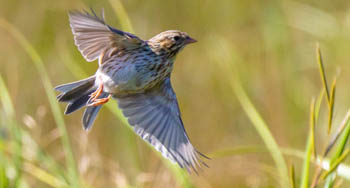
- Rare species and their habitats, including Roseate terns, Ipswich Sparrows and rare or endemic insects – including observing changes in plant and soil characteristics
This important work enables Parks Canada to deliver on its commitments to maintain ecological integrity at Sable Island National Park Reserve.
Observations
The exclosures have been effective in keeping the horses excluded.
Vegetation has visibly changed within the exclosures:
- Plants grow taller and denser
- Areas previously bare of vegetation have filled in
- Changes are more subtle in the summer months
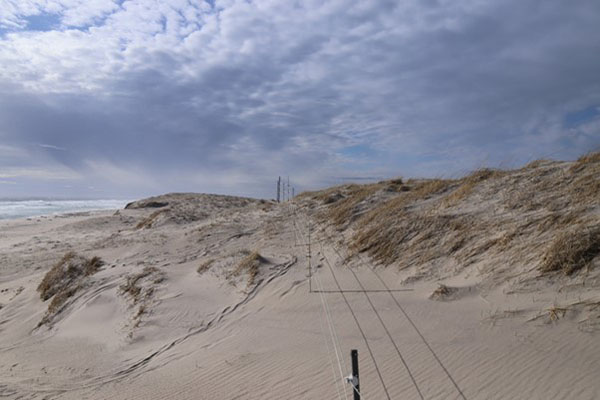
- In winter, dead marram grass traps more sand, making the dunes uneven around the clumps — over time, this will help the dunes grow and become more stable
Results
Researchers are currently in the process of analyzing the data. A final report by Parks Canada will be available when the analysis is complete.
Parks Canada and the Sable Island Institute are preparing a long-term plan for the exclosure fences.
Methods
Exclosures
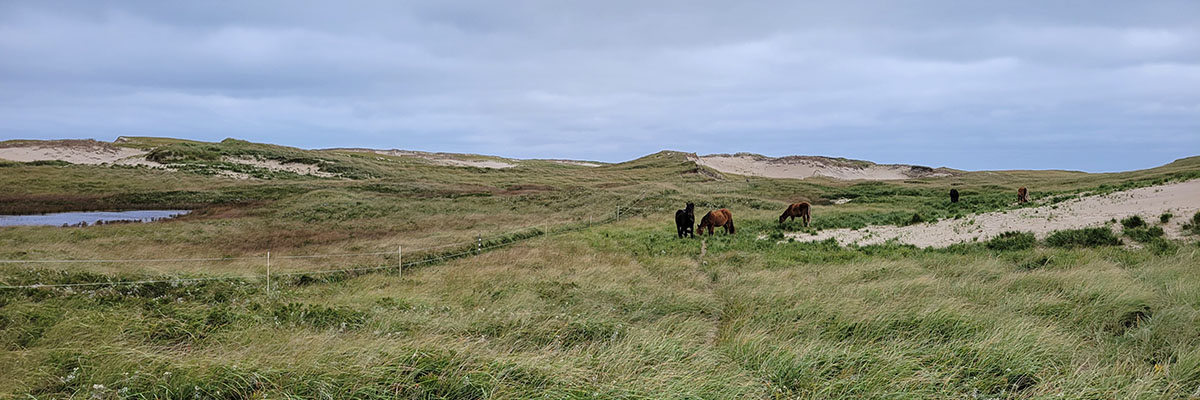
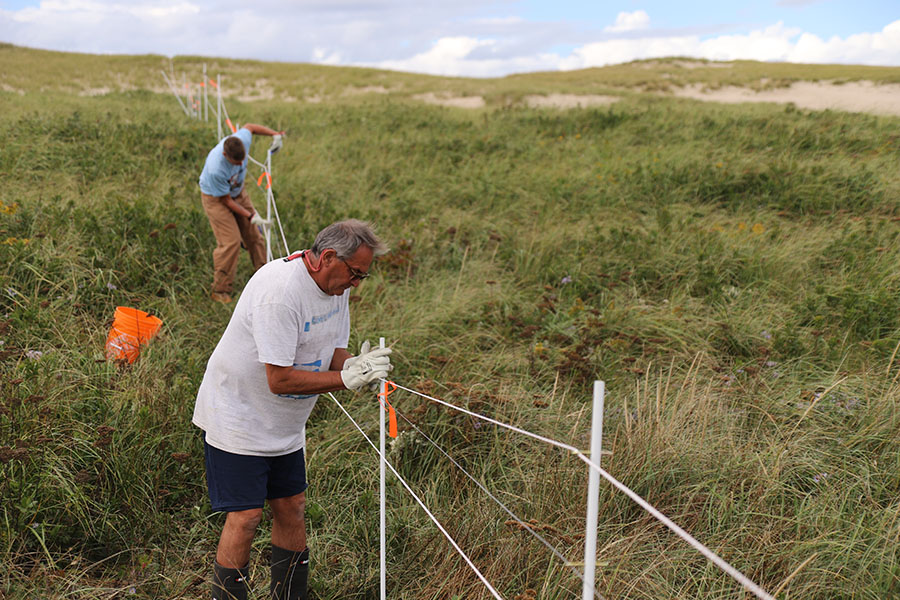
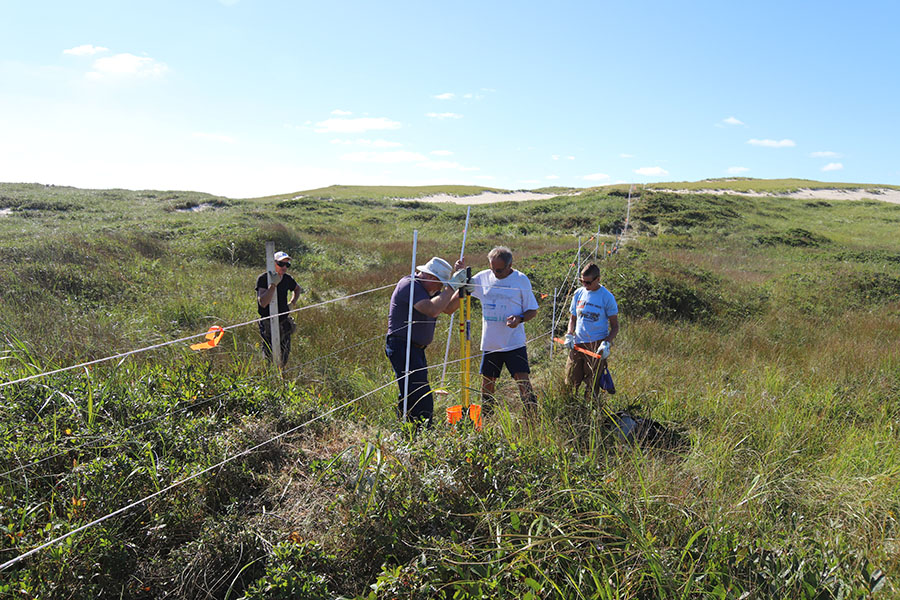
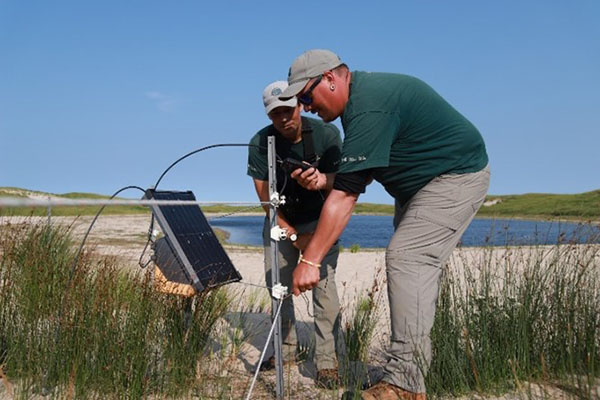
Temporary fences were installed to create exclosures to keep the wild horses from walking through or grazing in nine small (one hectare) areas on the island and three small ponds.
Total area of the island inside the exclosures:
- 0.6% of the total vegetated area of the island
- ~5% of the freshwater reserves
Several control sites were identified in similar areas on the island. The control sites remained open to the horses and were not fenced in.
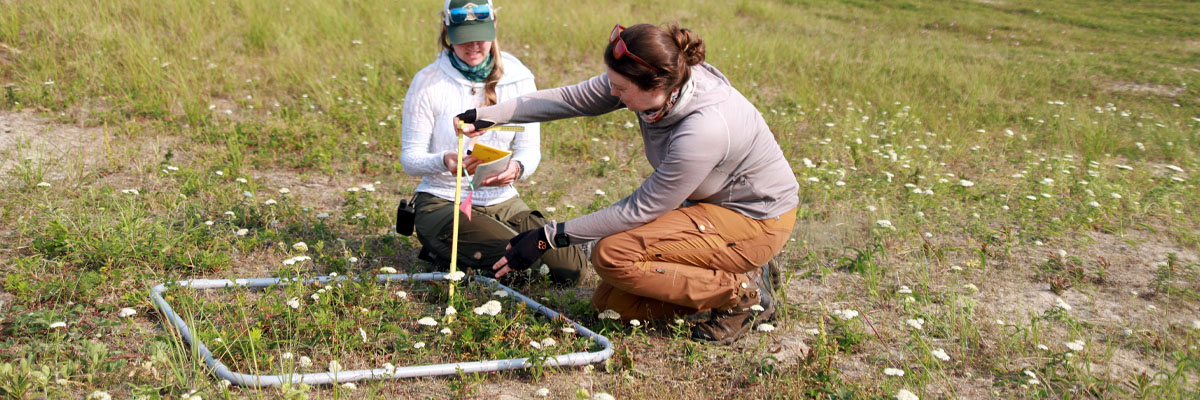
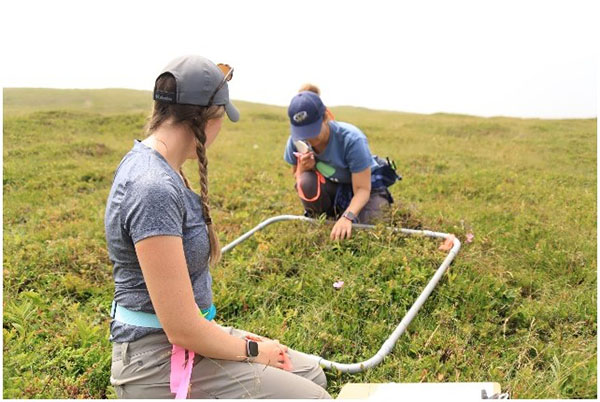
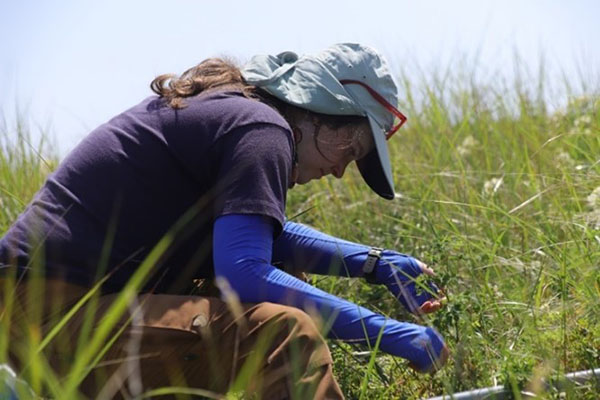
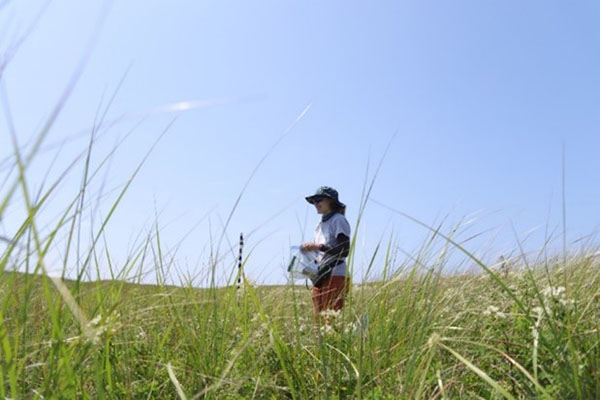
Scientists studied key ecological attributes inside the exclosures and in the control sites.
Ensuring the well-being of Sable Island’s horses
Since their protection in 1961, the horse population has been steadily increasing with the population fluctuating between 450 and 550 in recent years. Parks Canada considers the Sable Island horses part of the island’s ecosystem and, as such, protects them as wildlife under the Canada National Parks Act and the National Parks Wildlife Regulations.
Use of electric fences
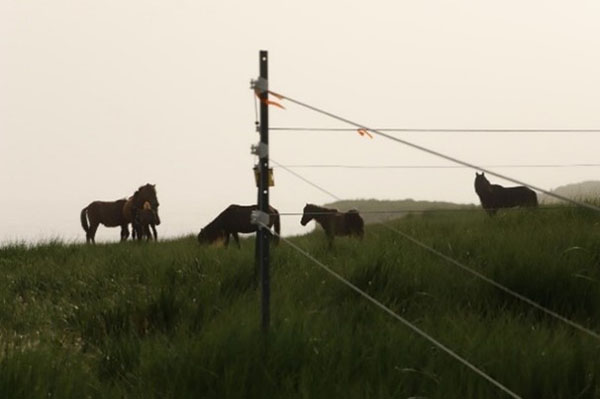
Electric fences are regularly used for horses and are designed to startle, not harm the animals. After consulting with experts in the field, electric fences were deemed to be the safest. The fences are checked regularly to ensure the safety of horses.
Access to food
The exclosures are a very small fraction (0.6%) of the vegetated area of the island. There has been no indication that foraging is limited for the horses, as their population has been steadily increasing since 1961.
The horses are not tame and do not depend on humankind for survival. The horses feed primarily on the abundant marram, or beach grass, that covers a third of the island’s surface. They supplement their food intake by eating various other plants, such as beach pea, sandwort, and even some algae that washes up on the beach.
Access to water
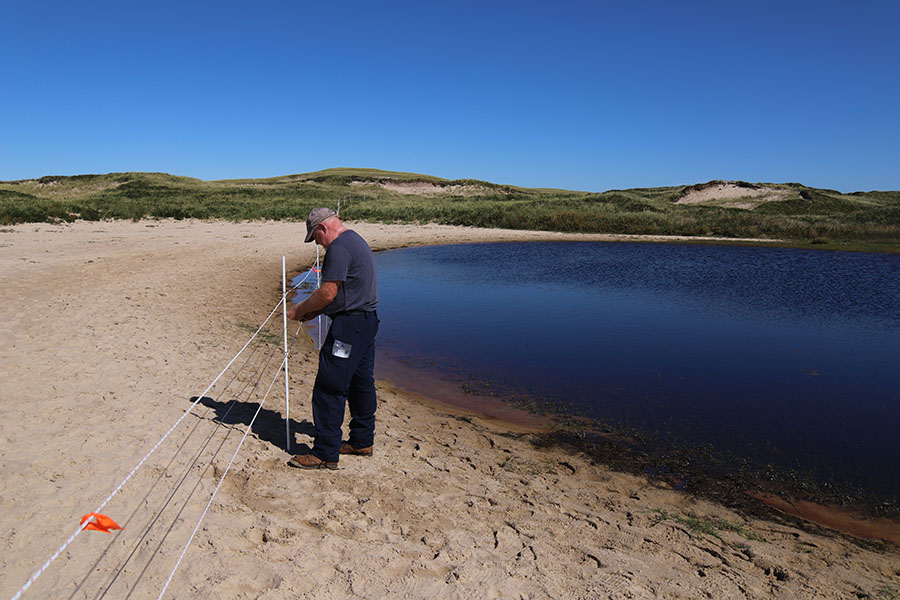
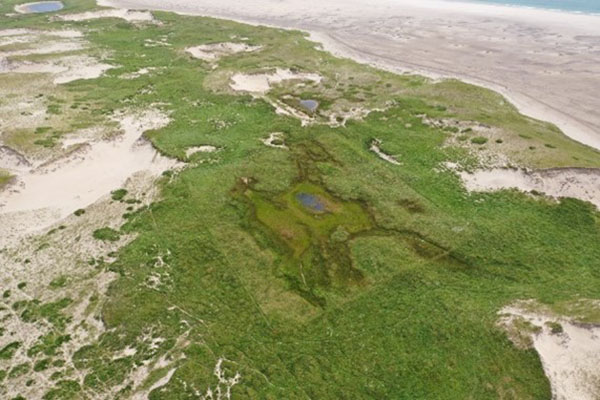
Three smaller ponds representing 5% of the freshwater area on the island are also fenced in, or exclosed. The pond exclosure locations were selected in areas where there are alternate sources of water from nearby ponds.
Horses access freshwater from:
- many ponds on the island
- wells that they dig themselves
- abundant standing water in the wetter seasons
Collaboration and funding
The Fences in the Sand project is a collaboration between Parks Canada and the Sable Island Institute.
A Parks Canada Conservation and Restoration (CoRe) program
The Fences in the Sand project is part of the Parks Canada Conservation and Restoration (CoRe) program. The Government of Canada provides a federal investment of $15 million annually to support high priority projects that make a difference on the ground in maintaining or restoring ecological integrity and helping in the recovery of species at risk.
- Date modified :