

The aquatic restoration team at Riding Mountain National Park onboard an electrofishing vessel
Invasive species: aquatic ecosystems under stress at Parks Canada
Invasive species are one of the biggest threats to biodiversity in the world. This is especially true in aquatic environments. Parks Canada and partners are using innovative ways to tackle aquatic invasive species.
Watch this short video to learn how you can help to stop aquatic hitchhikers with these simple steps: Clean. Drain. Dry.
Text transcript
[Visual: A narrator speaks directly into the camera.]
Narrator (EN): Do you like spending time on the water? Then this message is for you.
[Visual: People paddle a canoe through the water, a snorkeller removes their mask, people fish in a mountain lake.]
Narrator (EN): What if I told you your watercraft or aquatic gear could be carrying invasive species that could harm ecosystems across the country?
Narrator (EN): Let me explain.
[Visual: A simplified outline map of North America appears in dark teal lines against a navy background. Dozens of dots are spread across the map, each representing a location where watercraft or gear originated before entering Canada’s mountain parks.]
Narrator (EN): See all these dots? These are locations where watercrafts and gear come from before entering Canada’s mountain parks.
[Visual: The map zooms into the mountain parks region. Animated lines extend from dots across the continent toward the highlighted mountain parks area, illustrating long-distance travel from lakes and rivers across North America and beyond.]
Narrator (EN): They travel not only from nearby lakes and rivers, but from waterbodies all across North America, and even other continents.
[Visual: The view shifts. The mountain parks region is highlighted at the centre of the map. Animated flowing lines extend outward in multiple directions, representing watersheds draining into major bodies of water.]
Narrator (EN): Now, watch this. The water from these parks doesn’t just stay put—
[Visual: The flowing watershed lines continue to animate outward from the mountain parks toward three labelled destinations: Hudson Bay to the northeast, the Pacific Ocean to the west, and the Arctic Ocean to the north.]
On-screen text: Hudson Bay | Pacific Ocean | Arctic Ocean
Narrator (EN): it drains into major waterbodies like Hudson Bay, the Pacific Ocean, and even the Arctic Ocean.
[Visual: People paddle a canoe and an animated zebra mussel larva appears emerging from the canoe, illustrating how watercraft can unknowingly transport invasive species.]
Narrator (EN): A watercraft or gear from one lake can bring invasive species into a park, and from there, those species can spread far and wide through these waterways, disrupting ecosystems and costing millions to manage.
Narrator (EN): And once aquatic invaders settle in, getting rid of them is nearly impossible.
[Visual: People clean their watercraft, paddles, and aquatic gear. A bold call-to-action appears on screen with the three key steps displayed in sequence.]
On-screen text: Clean. Drain. Dry.
Narrator (EN): That’s why it’s critical to clean, drain, and dry your watercraft and gear every single time—before you arrive and after you leave.
[Visual: Images of aquatic invasive species flash across the screen.]
Narrator (EN): A single dirty boat is enough to spread an invasive species to a new ecosystem.
[Visual: People paddle and enjoy recreational activities on the water. Fish swim through a healthy stream.]
Narrator (EN): Without these steps, tiny creatures like zebra mussels or Eurasian watermilfoil can wreak havoc—disrupting ecosystems, harming fish populations, clogging pipes and water systems, and getting in the way of your fun times on the water.
Narrator (EN): This is your reminder of how connected Canada’s waters are—and why protecting them is everyone’s responsibility.
[Visual: Bold white text appears centred on the dark navy background displaying the three-step call to action. The Parks Canada wordmark and beaver logo appear at the bottom of the frame. The video holds on this closing frame before fading out.]
On-screen text: Clean. Drain. Dry.
Narrator (EN): Clean. Drain. Dry. With these simple steps YOU can help keep Canada’s parks and waterways thriving for generations to come.
The stress of it all
Aquatic invasive species cause harm to freshwater and marine ecosystems and the native species that live in them. For instance, aquatic invasive species put stress and pressure on the ecosystem in many ways.
They can outcompete native species for resources and can mate with native fish causing interbreeding. In addition, through intense predation, aquatic invaders can change the natural structure of the food chain.
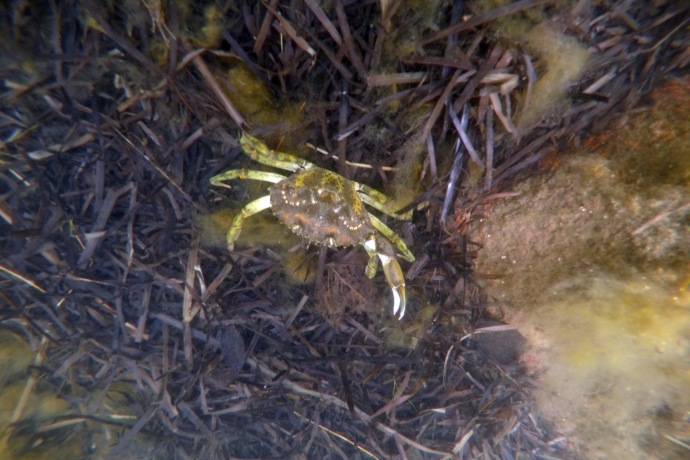
The European Green Crab is one of the most invasive aquatic species in the world. They often destroy eelgrass habitat and harm the environment. Parks Canada found European Green Crabs in parts of Gwaii Haanas National Park Reserve and Haida Heritage Site. Watch how Parks Canada and the Council of the Haida Nation are monitoring and removing this invasive predator.
Controlling Invasive European Green Crabs at Gwaii Haanas in British Columbia
Text transcript
[A Parks Canada vehicle drives down a dirt road, towing a research vessel on a trailer.]Parks Canada logo
[Parks Canada and Council of the Haida Nation resource conservation employees prepare the boat for launch at the dock.]
Government of Canada logo and Haida Nation Logo
[Charlotte and Chavonne speak to the camera while standing in the research boat, floating near a rocky shore.]
[Name Tag] Charlotte Houston, Resource Management Officer, Parks Canada
[Name Tag] Chavonne Guthrie, Resource Management Technician, Parks Canada
My name is Charlotte and I'm a resource management officer.
My name's Chavonne and I am a resource management technician.
We work in Gwaii Haanas, a national park reserve, national marine conservation area reserve, and Haida heritage site.
Title: Controlling Invasive European Green Crabs, Gwaii Haanas National Park Reserve, National Marine Conservation Area Reserve, and Haida Heritage Site
[Scenic images of the blue water and green mountains in Gwaii Haanas flash across the screen.]
[Resource conservation employees Charlotte, Chavonne and other team members drive the boat to the research location in Gwaii Haanas.]
Gwaii Haanas is co-managed with the Haida Nation.
This week we're working with the European Green Crab research team from the Council of the Haida Nation.
[Text] The European Green Crab is one of the most invasive aquatic species in the world.
[Gin prepares crab traps at the back of the research boat.]
[Name Tag] Gin Kampen, European Green Crab Response Assistant, Council of the Haida Nation
So, Gin, what are we looking for?
[Gin speaks to the camera while still preparing the crab traps.]
We're looking for European Green Crab, which are invasive to Haida Gwaii.
[A Green Crab crawls across a wooden dock.]
[Text] Ts’a’ám SG̲énuwaas | Tllga jii.nga sda k̲’uust’an k’inhlG̲ahl | European Green Crab / Carcinus maenas
They're really bad for the environment because they often destroy eelgrass habitat.
[Eelgrass sways gently underwater.]
And what they tend to do is snip the eelgrass and burrow into the mud banks underneath, causing instability in the eelgrass bank.
[The next shot reveals a section underwater where the eelgrass has been removed and the mudbank underneath is exposed.]
This is bad because eelgrass is like a nursery for a lot of our native species, like Pacific Herring and salmon, and octopus and many other species.
A photo of Pacific Herring appears.
[Text] Pacific Herring /Clupea pallasii
[A photo of Pacific Salmon appears.]
[Text] Pacific Salmon /Onbcorhynchus
[A video of a Giant Pacific Octopus crawling along the ocean floor appears.]
[Text] Giant Pacific Octopus / Enteroctopus dofleini
[Native Purple Shore Crab crawl along the bottom of a crab trap.]
[Text] Native Purple Shore Crab / Hemigrapsus nudus
They also outcompete our native shore crabs and juvenile Dungeness.
[A photo of a Dungeness Crab appears.]
[Text] Dungeness Crab / Metacarcinus magister
So they're pretty harmful for our environment.
[A woman standing on the bow of a boat drops a crab trap into the water.]
[Text] Traps are laid in areas that resemble typical Green Crab habitat. In 24 hours, they will be checked for crab and logged for data purposes.
[A woman drives a boat to the next crab trapping location. Another woman prepares crab traps.]
[Chavonne tosses a crab trap into the water while standing on the front of an aluminum boat.]
[Chavonne, Gin and another Parks Canada employee stand on the front of the boat while Chavonne speaks into the camera.]
It's day three and yesterday we got some bad news.
Previously, we had not found any Green Crabs in Gwaii Haanas, but yesterday we found some in Echo Bay.
So that's really sad to find.
[Gin makes a “thumbs down” gesture toward the camera.]
And then another devastating thing is one of the bears got one of our traps.
[The other Parks Canada employee holds up a flattened crab trap.]
It’s a little bit crushed.
But hopefully just in that one location, we find them so we can mitigate their impacts.
Fingers crossed.
[Gin lifts a Hairy Shore Crab from a crab trap and brings it toward the camera.]
So this is a Hairy Shore Crab.
[Text] Hairy Shore Crab / Hemigrapsus oregonensis
He's got hairy legs and he's one of the "good guys" native to Haida Gwaii.
[Gin reaches back into the crab trap, pulls out a Green Crab and shows it to the camera.]
And it actually looks like we caught a Green Crab, which is really sad.
[Text] Ts’a’ám SG̲énuwaas | Tllga jii.nga sda k̲’uust’an k’inhlG̲ahl | European Green Crab / Carcinus maenas
This is the first Green Crab that we've caught here in Slim Inlet, here in Gwaii Haanas.
So, yeah, as you can see on either side of its eyes, it has five points.
[A photo of a Green Crab appears. Labels appear, labelling each of five points on either side of its eyes.]
If you look at the shape of the carapace, they're quite different.
[Two images appear on screen. One of a Purple Shore Crab labelled “Native - Purple Shore Crab / Hemigrapsus nudus"]
[The other image is of a European Green Crab, labelled “Invasive - Ts’a’ám SG̲énuwaas | Tllga jii.nga sda k̲’uust’an k’inhlG̲ahl | European Green Crab / Carcinus maenas"]
The shore crabs are often like square or rectangular, whereas the Green Crab has more of this pentagonal shape.
[Aerial images showcasing the islands and blue waters of Haida Gwaii flash across the screen.]
[A gloved hand holds a Purple Shore Crab in front of the camera.]
[Text] Purple Shore Crab / Hemigrapsus nudus
[Chavone laughs at herself as she attempts to begin filming a scene, but accidentally captures herself in the video.]
[Laughing] I flipped it.
[While standing on the front of a boat, Gin holds a Green Crab in one hand and a measuring device in the other.]
So now that we found Green Crabs, what is the next thing that needs to happen?
We're going to be recording the size and the sex of the Green Crab,
and then we're going to remove it from the marine environment.
[Aerial footage of a rocky islet in Gwaii Haanas appears.]
[Text] Once European Green Crabs Establish themselves, it’s nearly impossible to remove them completely—but we can mitigate their impacts on the ecosystem.
[Text] This was the first joint expedition between Gwaii Haanas and the Council of the Haida Nation to monitor the European Green Crab’s arrival.
[Text] Together, we will continue to mitigate the invasive species impact.
[Aerial footage of a tree-filled island moves across the screen.]
Parks Canada logo
Government of Canada logo and Haida Nation Logo
Eelgrass is an ecologically significant species and an important habitat for fish and other marine life. Eelgrass even mitigates climate change by storing “blue carbon”. That is why Parks Canada works to protect eelgrass beds and restore eelgrass after it's been degraded by aquatic invasive species.
Learn more about what Parks Canada has done to prevent European Green Crabs at Kejimkujik National Park Seaside in Nova Scotia:
Text transcript
Parks Canada beaver logo appears[Music]
An illustrated map of Nova Scotia appears, with a place marker over top of Kejimkujik National Park Seaside.
[Text] Kejimkujik National Park Seaside
The camera zooms into a lake in Kejimkujik National Park Seaside. A label appears in the top left corner, indicating the year is 1986.
The lake is covered almost entirely with Eelgrass. An accompanying label indicates, “100% Eelgrass”.
[Text] Pre-Green Crab Invasion
Green crabs float beneath the water amongst the Eelgrass.
[Text] Green Crab Arrival
The date on the map of the lake changes to 1987.
[Text] Decrease in Eelgrass due to Green Crab invasion
The years in the top left begin scrolling rapidly to indicate the passage of time until the year 2009. As the years pass, the amount of Eelgrass covering the lake decreases from 100% in 1987 to 4% in 2009.
[Text] Green Crabs removed
A number counter appears and begins to increase, indicating the number of Green Crabs that have been removed from the lake between 2009 and 2016.
By the year 2016, 1,743,951 crabs have been removed from the lake.
As the number of crabs removed increases, the percentage of Eelgrass increases alongside it.
[Text] 34% Eelgrass restored from 2010 to 2016
Eelgrass sways gently underwater as small fish swim through it.
Parks Canada logo appears
These actions help the marine environment recover.
Unwanted guests
Aquatic invasive species often arrive in new environments by accident. For instance, the Zebra Mussel and the European Green Crab can “hitchhike” on boats to a new waterbody.
Some species, like the Brook Trout in the Rocky Mountain national parks, were introduced for recreational fishing. This was at a time when the impacts of Brook trout on the ecosystem were less known.
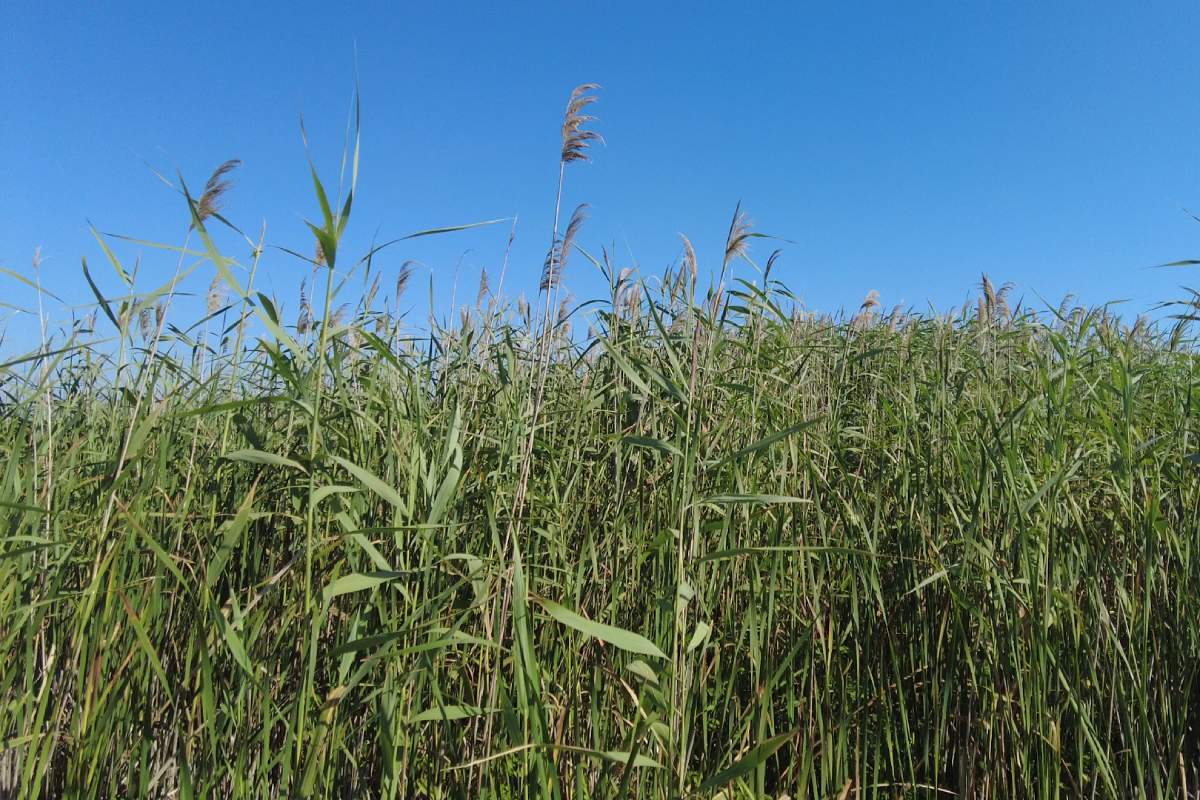
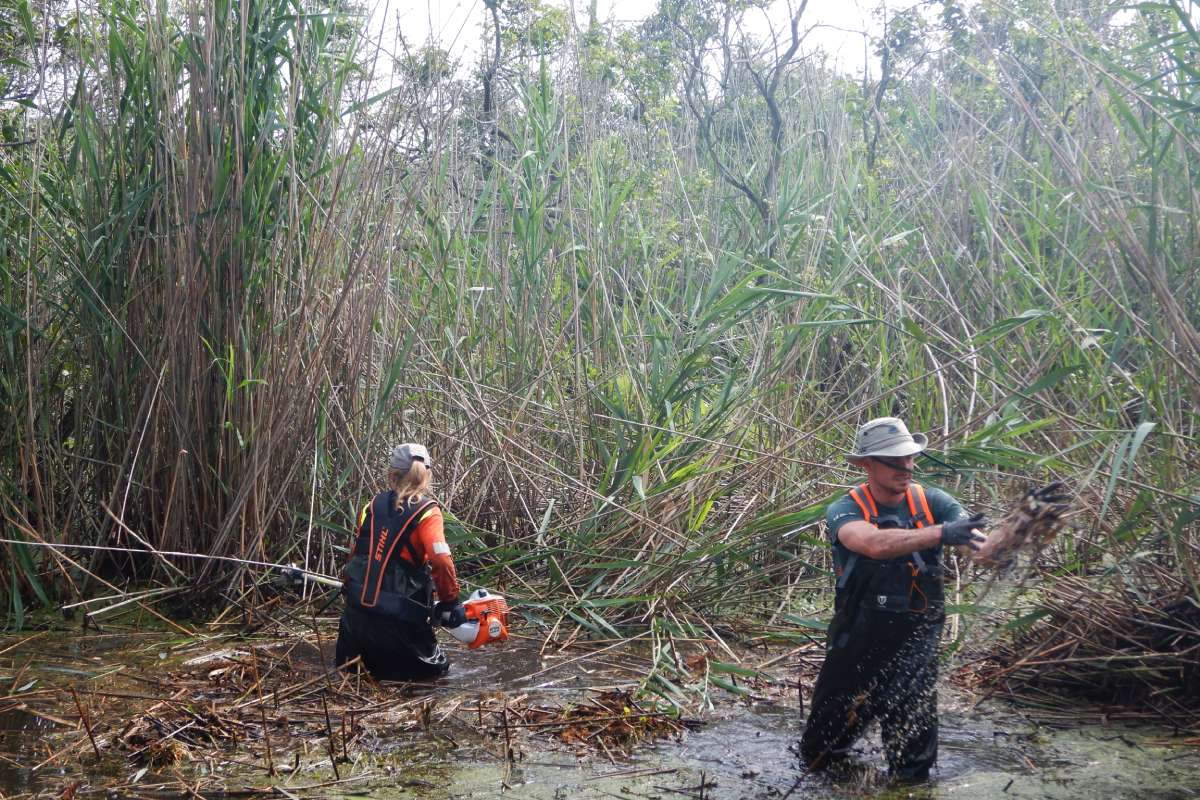
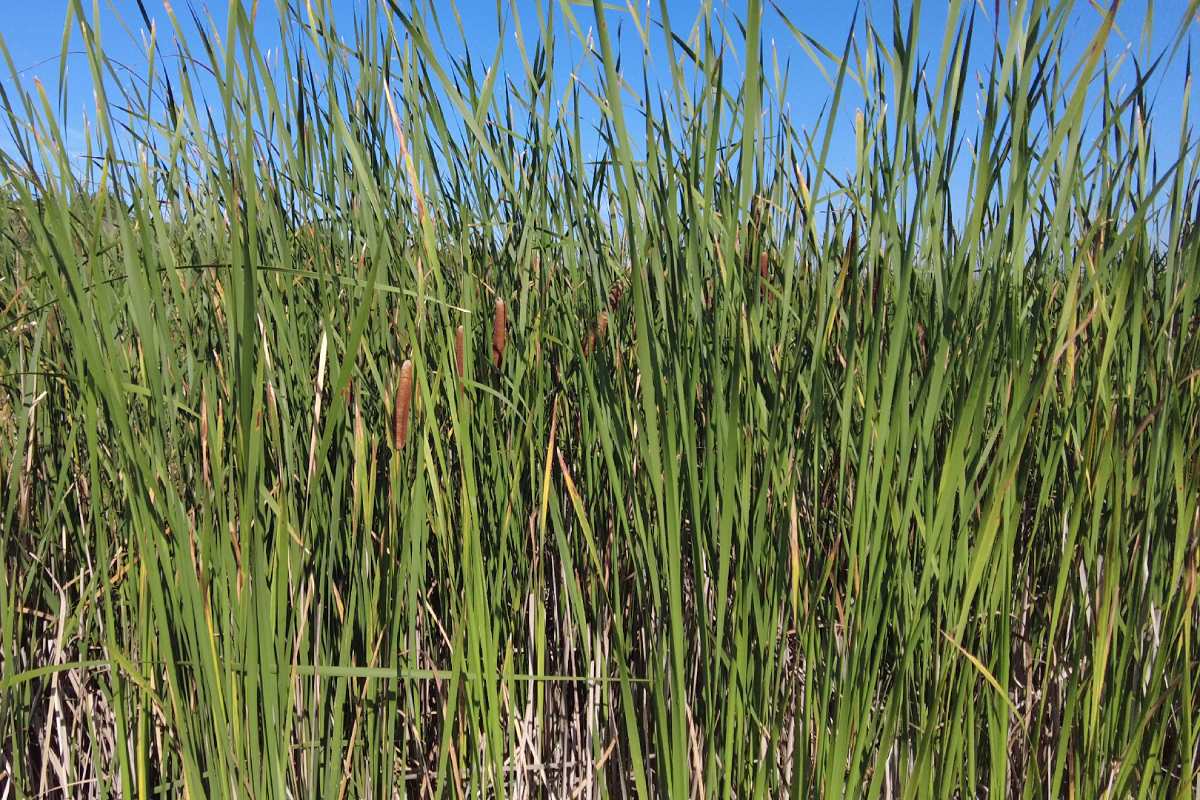
Aquatic invasive species can be parasites, like Whirling Disease, which can seriously harm fish. Aquatic invasive species can also be plants, like non-native Eurasian Watermilfoil, Phragmites, and Cattails.
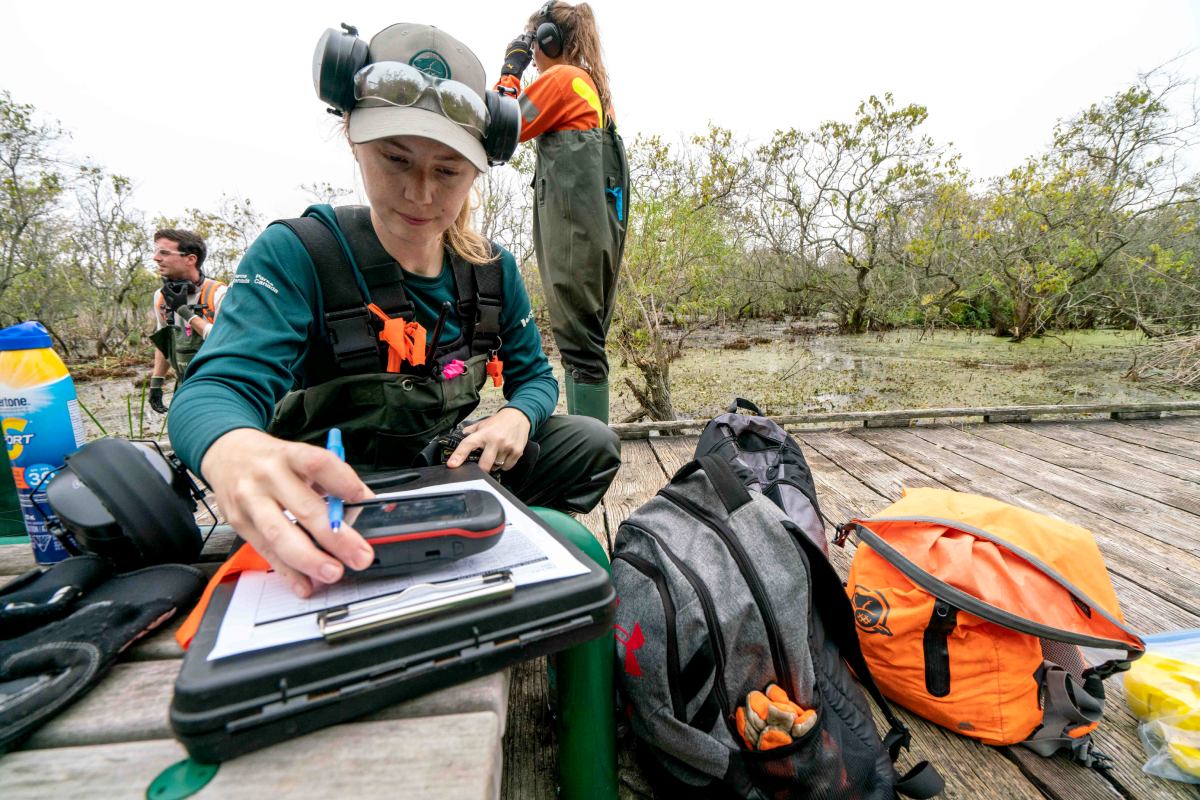
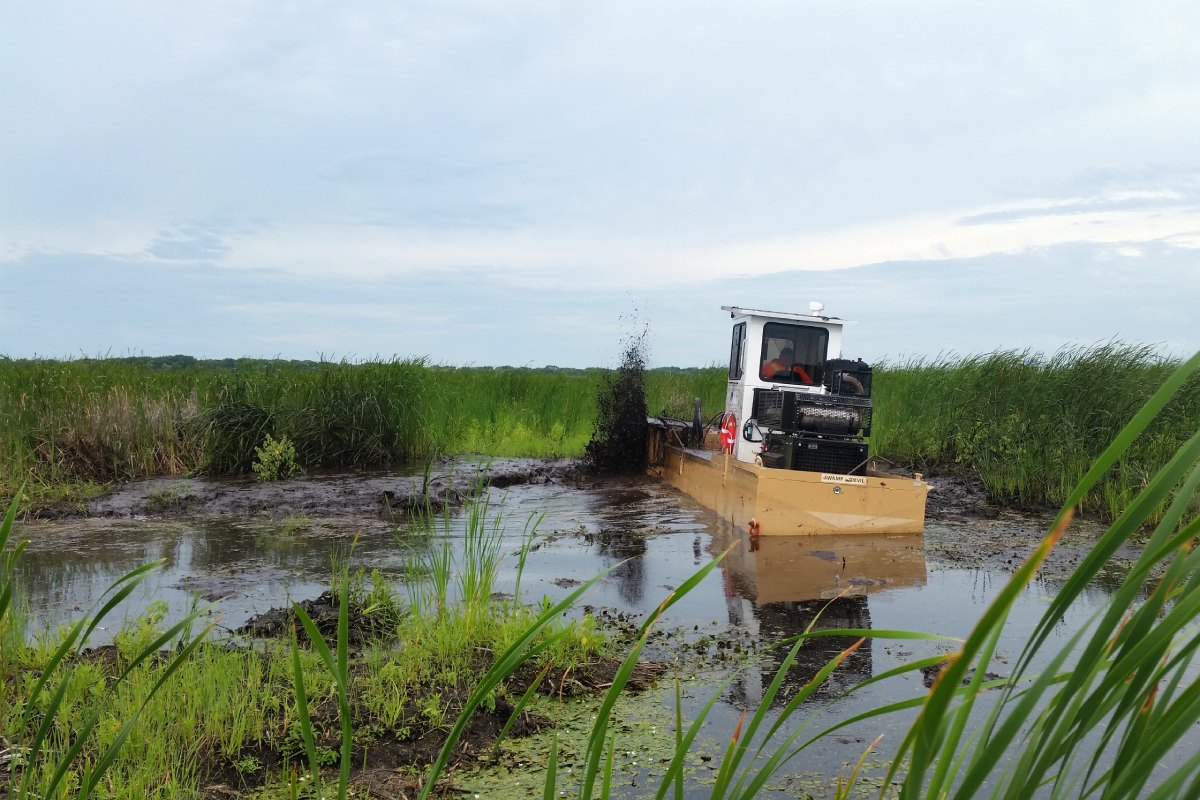
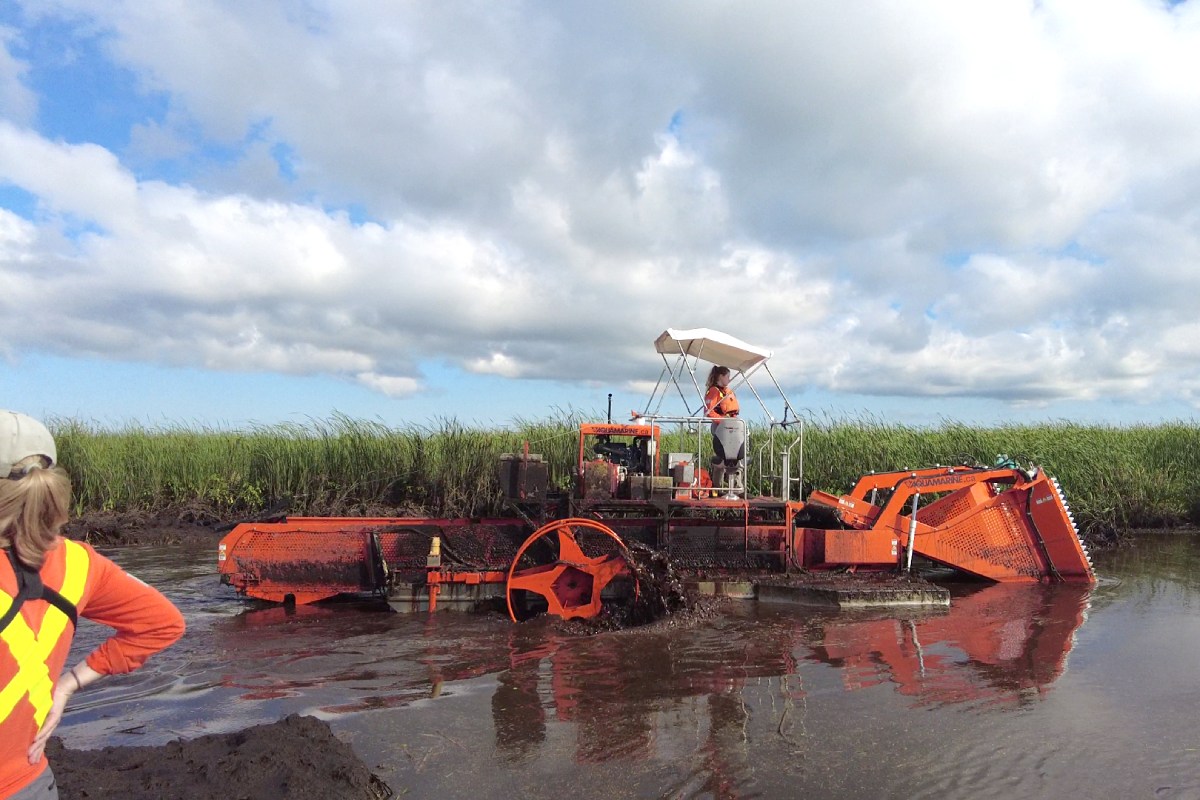
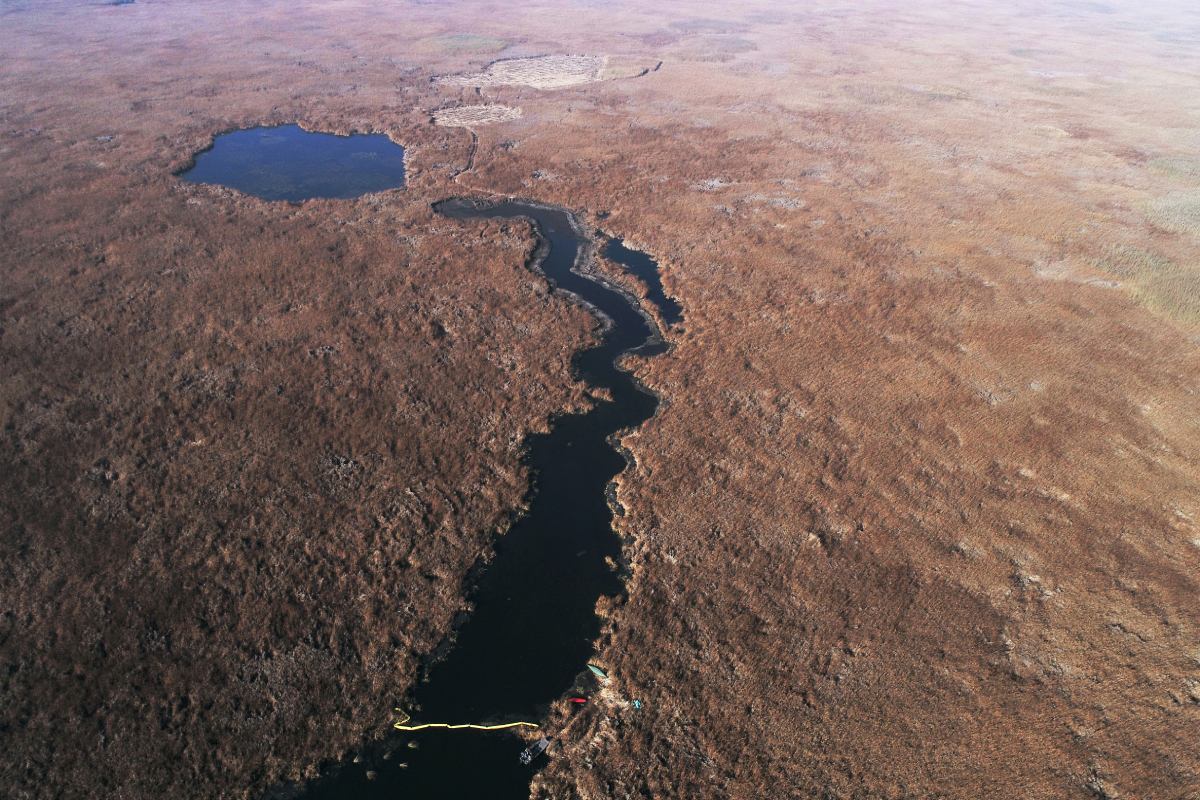
Restoring the marsh at Point Pelee National Park
.jpg)
Select images to enlarge
High costs
It's not just environments that suffer. Aquatic invasive species can negatively impact human social and cultural values. This includes access to water for boating, Indigenous harvesting, and recreational fishing. Fisheries are harmed when invasive species prey on native fish that people like to catch.
Some invaders can even force a closure of a beach, lake, or boat launch, preventing its use and enjoyment.
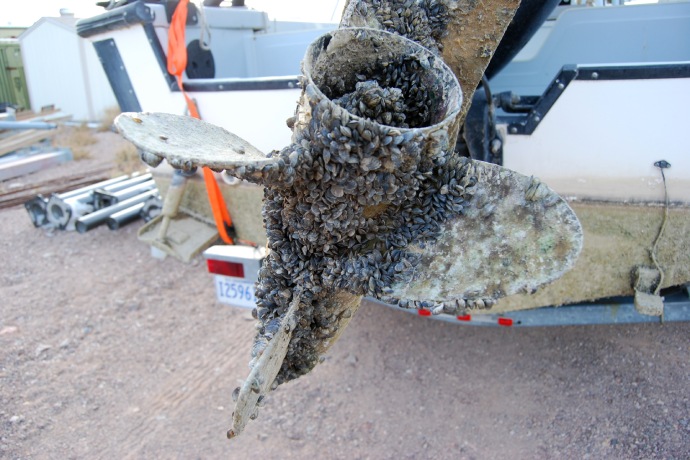
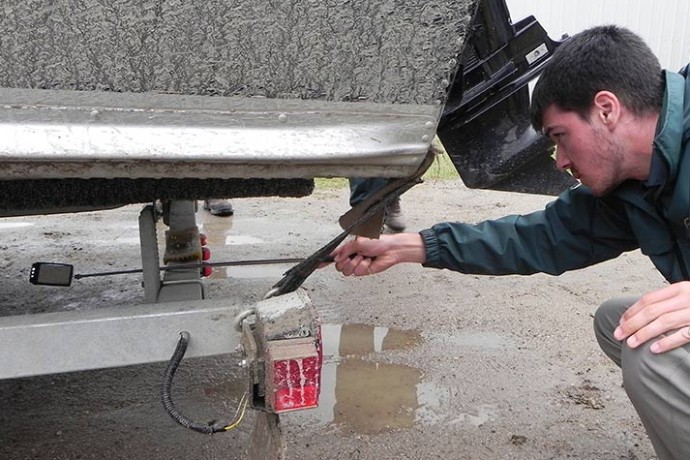
Preventing the introduction and spread of aquatic invasive species is expensive. Yet prevention is far less expensive than controlling, managing and monitoring once the invading species is established. An ounce of prevention is worth a pound of cure!
Read on for 2 short stories about this work
-
Kejimkujik National Park and National Historic Site
A world’s first at Kejimkujik
Nova Scotia
Keep out
Chain Pickerel are an invasive freshwater fish in Nova Scotia. They were found in Kejimkujik in 2018. It only took a few years before these invaders spread throughout its waters.
Chain Pickerel are voracious predators and out-compete native fish for food. They eat almost anything in the water, including fish, reptiles, frogs, dragonflies, and even ducklings!
Parks Canada staff had to stop the Chain Pickerel from spreading further, and prevent other invasive fish from entering. So in 2019, staff built two fish barriers. These modular barriers were useful tools for reducing the movement of invasive fish. Parks Canada found this technique useful for managing smaller, closed aquatic systems like lakes.
Staff monitored areas immediately downstream of the barriers in peak fish migration times. Where needed, Parks Canada helped native fish cross the barriers.
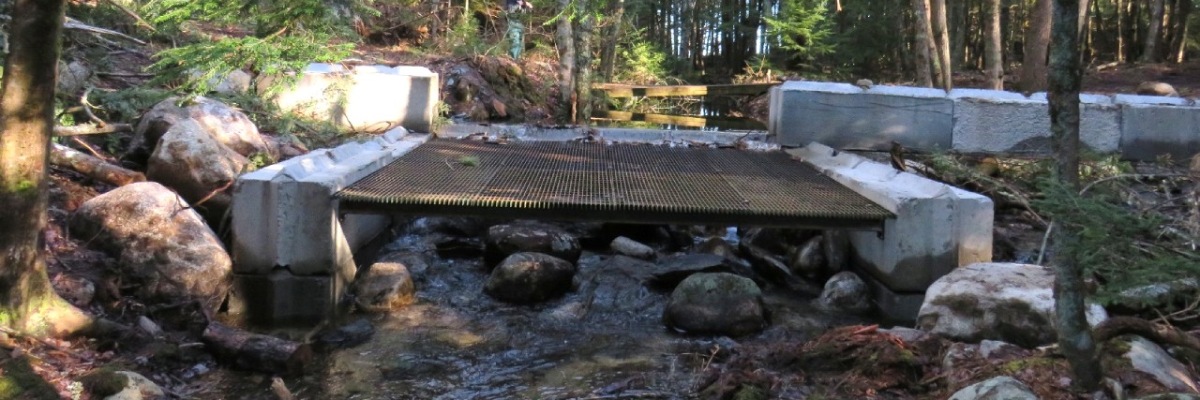
Modular fish barrier at Cobrielle Brook in Kejimkujik National Park and National Historic Site Efficient conservation
Once the Chain Pickerel were contained, staff could remove the invasive fish. Kejimkujik staff bought the world’s first electric-powered electrofishing boat as a powerful tool for surveying and removing the invasive pickerel.
We had past successes working with provincial counterparts using an electrofishing boat for removing invasive fish. Purchasing this equipment ourselves was an opportunity to invest in greener technology and for greening our operations.
This boat helps increase Parks Canada's capacity to remove invasive fish all while reducing greenhouse gas emissions by using a cleaner and quieter electric engine.
.jpg)
The electric powered electrofishing boat at Kejimkujik 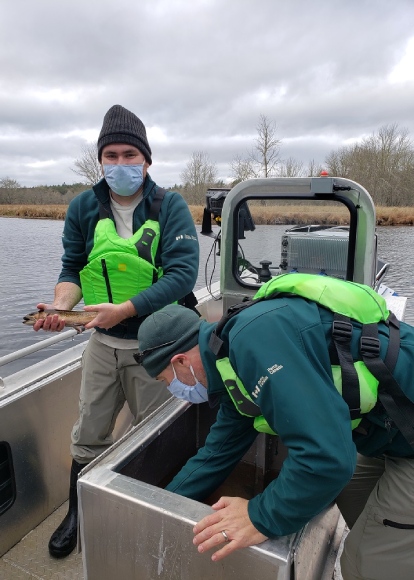
Staff remove the invasive Chain Pickerel from the freshwater ecosystem How anglers can help
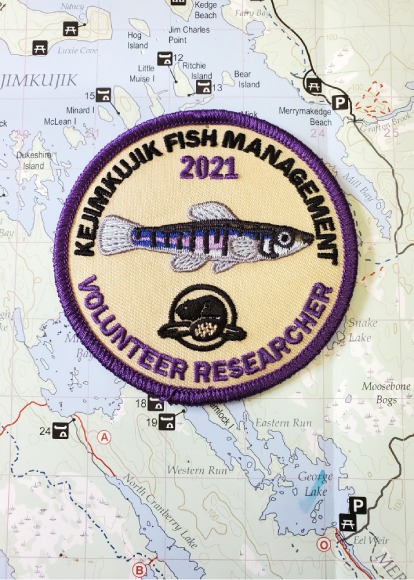
The prized crest is given to anglers at Kejimkujik who contribute their catch data for research Conservation staff also worked with site law enforcement. Together they created new rules that required anglers to release all the native fish and keep all invasive ones.
Team members also developed an angler diary program to tap into the experiences and observations of recreational anglers at Kejimkujik. The program resulted in hundreds of hours of data each year that Parks Canada uses to inform freshwater ecosystem management.
It also created a dialogue: the program serves as an engagement tool to talk about aquatic invasive species. Anglers are given a crest each year they return their diary.
This highly successful initiative has been met with lots of enthusiasm. Freshwater stewards are “angling” for their highly-prized crest each year!
-
Environmental DNA
We know you’re in there
eDNA
Only when a species is detected, can it be mapped and removed. One way that Parks Canada is using innovative technology to detect aquatic invaders is through environmental DNA (eDNA).
Detecting clues
This method serves as an early warning siren for aquatic invasive species. It enables species detection from the DNA left behind in the water.
Once Parks Canada knows invasive species are present using eDNA, staff can take steps to manage them and prevent their spread. This can include opening or closing water access points, like boat launches and beaches.
Some Parks Canada scientists also use eDNA to learn whether endangered species are in the waters.
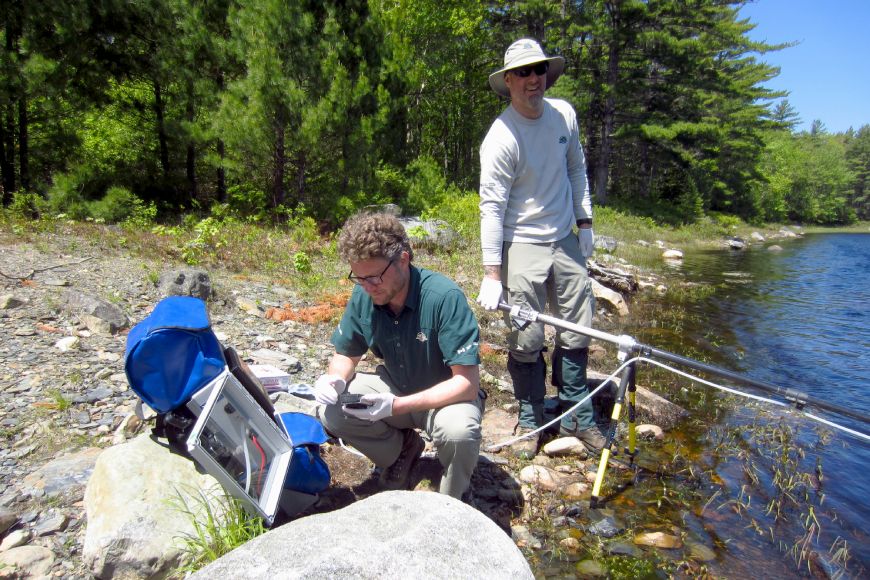
Conservation staff at Kejimkujik National Park and National Historic Site collect and process eDNA samples from a lake 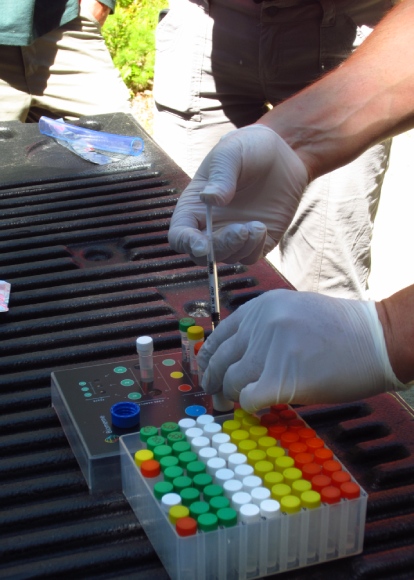
Aquatic scientists use eDNA to detect the presence of aquatic invasive species and endangered species in the water Case solved
The use of eDNA as a tool helps Parks Canada make decisions on what management and response efforts are needed. It also provides evidence that conservation actions are working.
.jpg)
Water world
Invasive species are very hard to manage in aquatic ecosystems. Many water environments are connected. For this reason, it's hard to control the spread of aquatic invasive species.
Sometimes aquatic invasive species enter from headwaters that flow into a national park. Launching a boat that came from other waters can bring in small aquatic invaders or fragments of plants.
Unlike on land, we don’t always see aquatic invasive species. This is one reason that eDNA is such an effective tool for detecting aquatic invasive species.
Taking action
Parks Canada takes a lot of action to prevent and manage aquatic invasive species. Megan Goudie, Ecosystem Scientist with Parks Canada says “once an aquatic invasive species is confirmed, management actions have to be taken depending on the risk.”
Parks Canada works with and learns from many different people and organizations from across the country and around the world. It takes many people working toward a solution.
Parks Canada collaborates with:
- Indigenous nations and communities
- other federal departments
- the provinces and territories
- universities and colleges
- non-governmental organizations
- the public
Together, we use different methods for controlling aquatic invasive species. We share and adopt best practices. Some of these include:
- creating early detection and monitoring plans
- mapping their invasion
- managing their spread and removal, like building impassable barriers for invasive fish
- applying regulatory tools, like mandatory watercraft inspection stations
- restoring ecosystems after invasive species have been removed
- protecting species at risk and their habitat
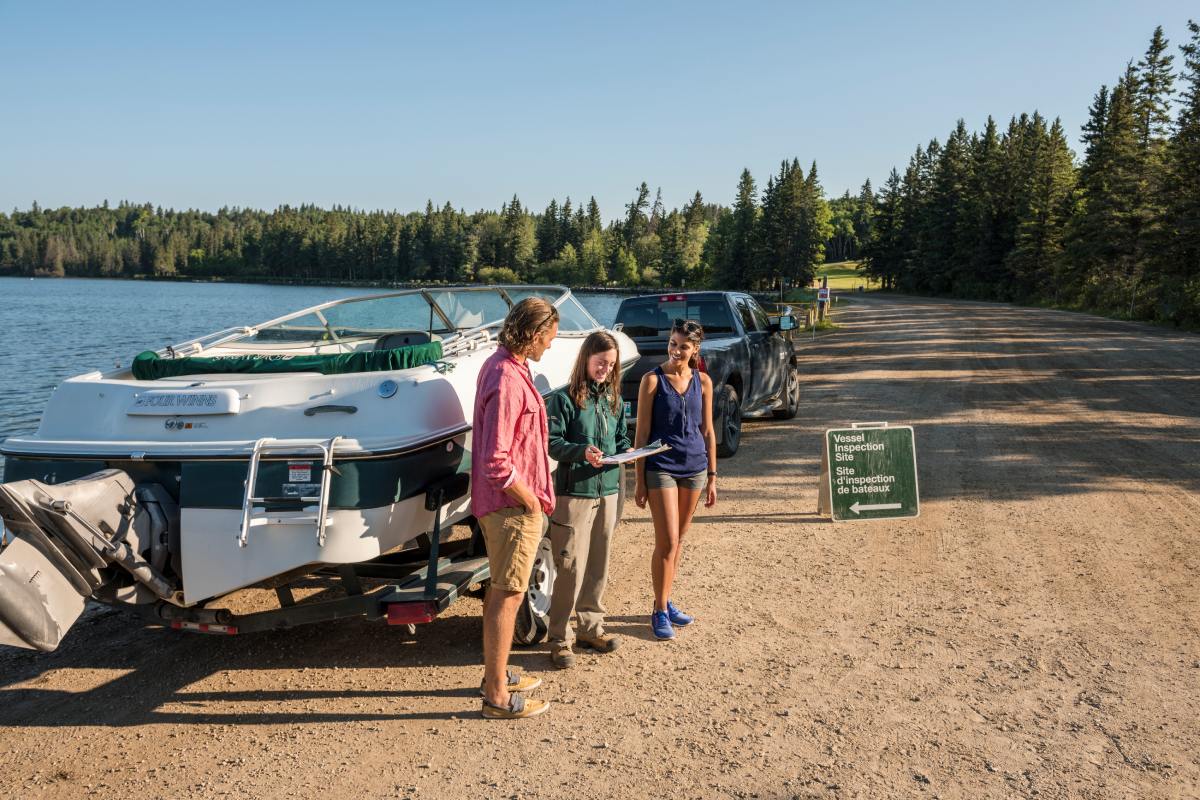
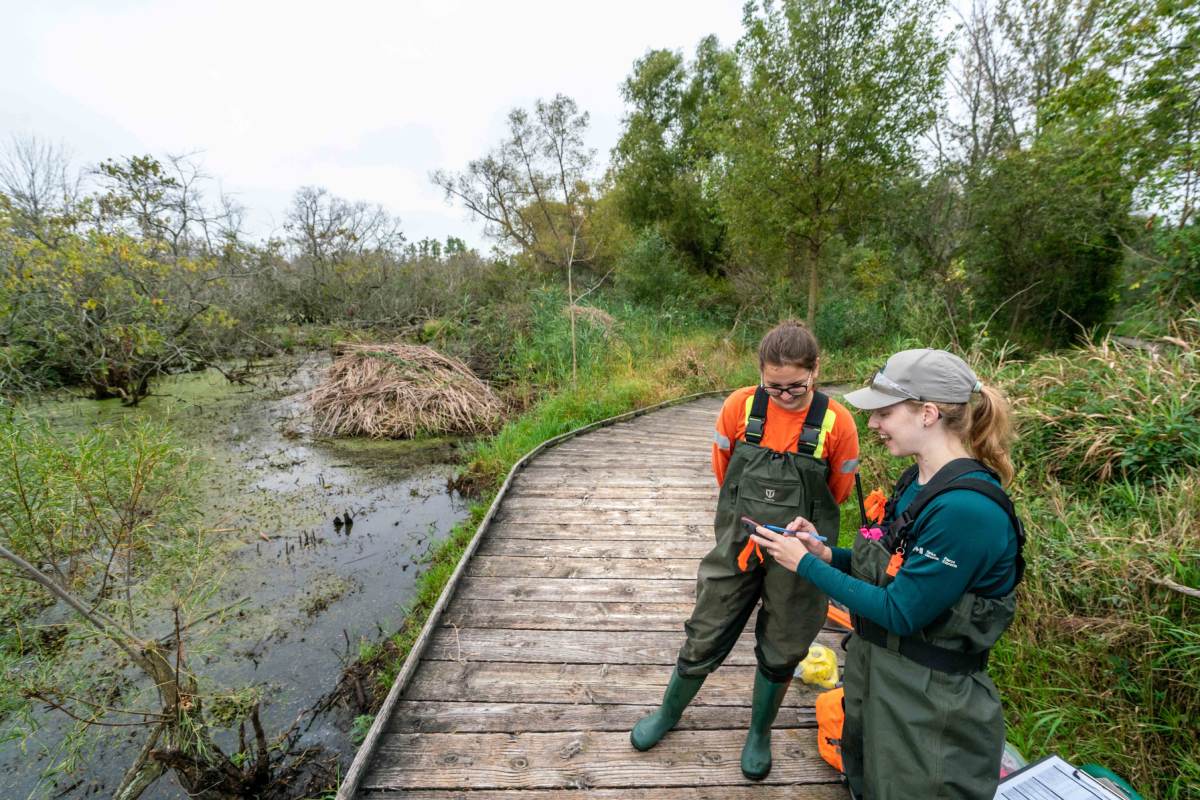
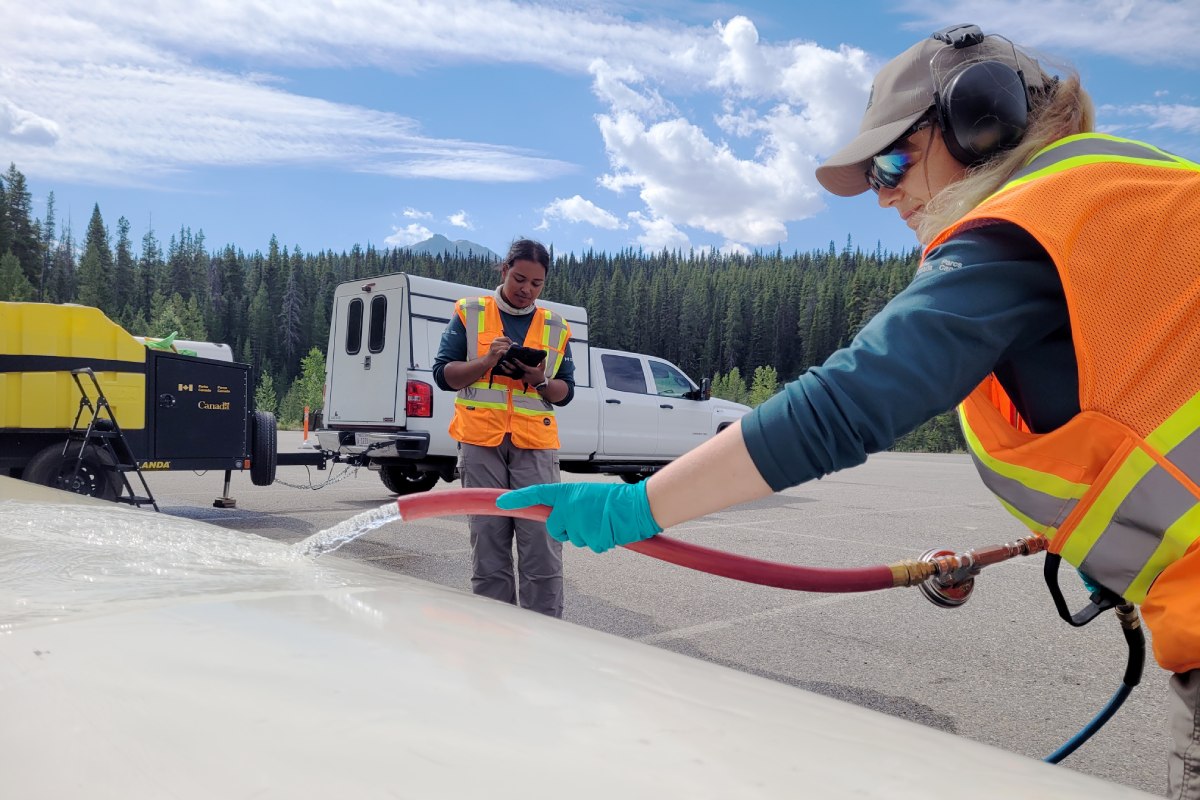
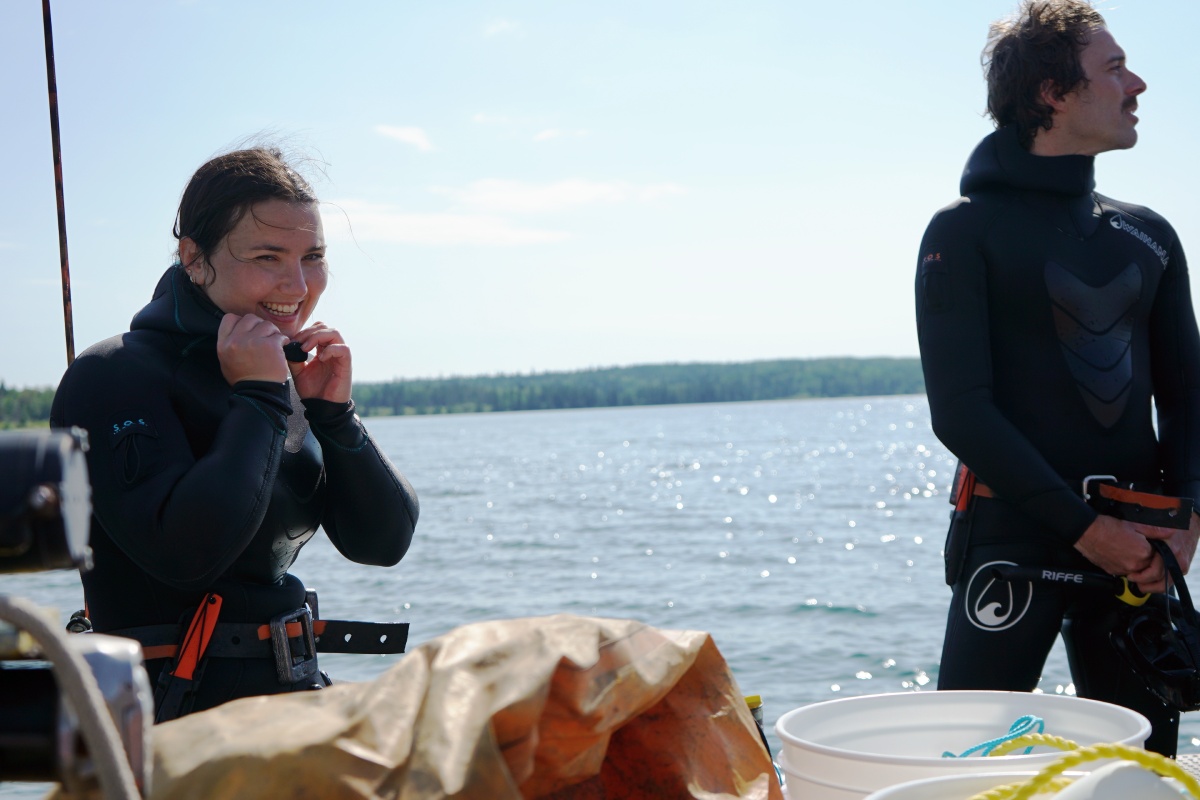
Select images to enlarge
Your role in protecting aquatic ecosystems
Visitors to Parks Canada administered places play a key role in preventing aquatic invasive species and protecting species.
Here are a few ways that you can help:
- Stop aquatic hitchhikers. Clean, drain, and dry your watercraft, paddle board, canoe, toys, and all gear before and after use:
- clean mud, sand, plant or animal parts from all items before leaving the shore
- drain all water from watercrafts, trailers, and gear:
- invert or tilt items
- open all compartments
- pull drain plugs
- dry items completely before entering any river, pond, lake or stream
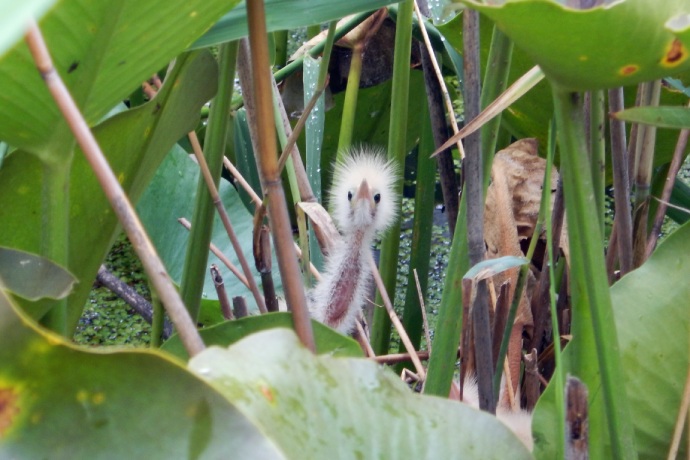
- Don’t let it loose! For the safety of our waters and the health of local ecosystems, it is illegal to release plants and animals into any Parks Canada administered site.
Related links
- Date modified :